


No products were found matching your selection.
Choosing cones and field markers for your layout
Start by deciding what each marker needs to communicate. A boundary, a starting point and a direction change are different parts of a session plan, even when the same equipment is used to identify them.
Read MoreRead Less
Think about visibility, the surface and the space available rather than buying solely by colour. Upright cones and low profile markers have different shapes and occupy different amounts of space. The Sports Training & Coaching collection provides related equipment for a complete session, but the markers themselves should be chosen for the role they play in the layout. Sketch the planned activity areas and count the points that need marking before comparing set quantities. This helps avoid ordering a large collection that still lacks the particular profile or number required for your regular programme.
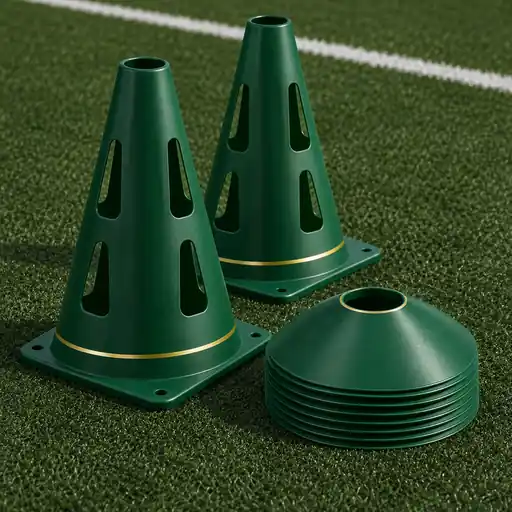
Comparing upright training cones and low profile discs
An upright cone provides a taller visual reference, while a low marker sits closer to the surface. Neither profile is automatically suitable for every activity. Compare Training Cones when height and a clear upright point matter to the plan, and Marker Discs when the specified activity calls for a lower format. Check the actual dimensions rather than estimating them from a stacked product photograph. Shape, flexibility and base design should be read from the individual listing. A disc and a cone that appear similar in diameter may still behave differently in storage and setup. If a coach or programme specifies a particular marker type, confirm that the product matches it instead of choosing a substitute simply because the colour or package size is convenient.
Using colour and quantities to organise stations
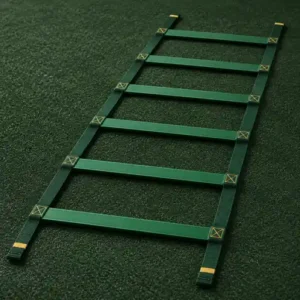
Colour can help distinguish routes, groups and activity areas when it is used consistently in the session instructions. Decide how many colours you need and how many pieces of each colour must be available simultaneously. A mixed set may not provide the exact balance shown in a display image, so check the stated contents. Consider how staff will identify replacement pieces and whether a single colour purchase would be more useful than another mixed pack. For multi station activities, Agility Ladders may need clear approach and finish points, with markers positioned outside the movement path as appropriate. Keep unused markers at a defined collection point. A layout is easier to reset when the people preparing it know which colour belongs to each station rather than improvising a new meaning every session.
Checking surface suitability and clear movement routes
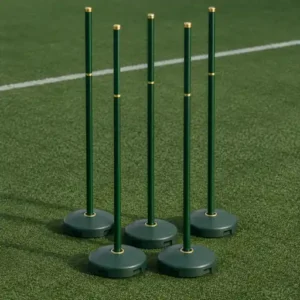
Follow the manufacturer's instructions for the intended surface and conditions. A marker selected for a grass field should not automatically be assumed suitable for every indoor floor, and a low profile does not remove the need for careful placement. Inspect the area for debris and through traffic before setting out the activity. Allow participants space to enter, leave and wait outside each active route. If markers are used beside Agility Poles, account for the pole bases and support footprint as well as the marker itself. Avoid crowding several pieces around a point where players are already changing direction. Review the layout whenever the venue changes, checking the actual room or field rather than copying a plan designed for a larger space without considering clearance.
Planning collection, carrying and shared storage
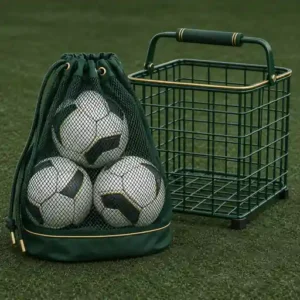
Compare the way cones or discs stack and whether the package includes a spindle, bag or other carrying accessory. Check what that accessory is intended to hold rather than assuming it fits every marker in the cupboard. Count the complete kit you need to move between storage and the activity area, including other equipment carried at the same time. A simple return routine helps staff recognise a missing piece before the next class. Keep different profiles and sizes identifiable so a later set can match the existing station plan. For schools, consider whether several groups need independent sets instead of sharing one collection between distant areas. Storage should protect the equipment in the arrangement the maker recommends and allow it to be retrieved without forcing bent or tightly packed pieces apart.
Cleaning and maintaining cones and markers
Inspect markers for splits, damaged edges or changes in shape before use, following the response described by the manufacturer when equipment needs attention. Remove mud or dirt using the permitted method and allow the pieces to dry as directed before stacking them away. Keep carrying fittings and storage accessories in good condition too, since a damaged handle or spindle can make an otherwise usable set awkward to organise. Separate equipment awaiting cleaning or replacement from the ready collection. At Sport Roos, compare dimensions, surface guidance, colour quantities and package contents alongside the price. Choose cones and markers that fit the planned activity, can be counted easily and remain practical to set out, collect and store across the sessions your school or club actually runs.
Cones & Field Markers: A simple colour and quantity record helps staff replenish missing markers without changing the meaning of the layout used across regular activity sessions.