

No products were found matching your selection.
Choosing ball pumps for your sports equipment
Begin with the balls you need to prepare and the inflation guidance supplied for them. Different valves and products can have different requirements, so compatibility should be confirmed rather than assumed from a familiar needle shape. Check the pump's intended use and supplied fittings alongside the ball manufacturer's instructions.
Read MoreRead Less
Consider where the pump will be used and how many balls are normally prepared at one time. The Sports Training & Coaching collection includes several related equipment types, but a pump should be selected for the actual collection it serves. A practical choice fits the ball requirements, can be handled comfortably by the responsible person and has a suitable storage place so the correct fittings are available when a session needs to be prepared.
Comparing pump formats, handles and hoses
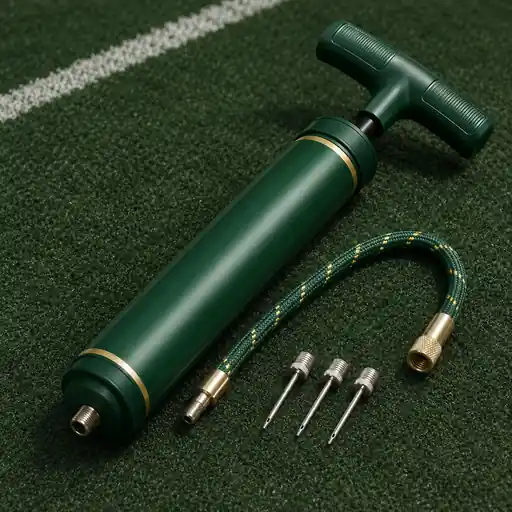
Read the design information for the particular model, including how it is operated and the arrangement of any handle, hose or support. A compact handheld pump and a larger format may have different carrying and handling characteristics. Compare stated dimensions rather than judging scale from a close product photograph. If a flexible hose is supplied, check how it connects and any instructions for protecting the valve and fittings during use. Do not assume a similar looking hose or replacement component is compatible across models. Keep the operating instructions available after unpacking. The useful comparison is how the complete pump arrangement suits the intended task and storage requirements, not simply whether the product appears small enough to fit into a general equipment bag.
Checking needles, valves and included accessories
Confirm the number and type of inflation fittings supplied, and read any compatibility information in the listing. A photograph showing several needles or adapters does not necessarily establish the contents of one package. Store fittings securely so they do not become loose among clothing or other equipment. If buying replacements, match the stated connection and intended application rather than choosing by appearance alone. Ball Bags & Storage can organise the balls themselves, but small inflation accessories need a separate suitable compartment. Keep any protective covers or holders specified by the manufacturer with the pump. A club with several ball types should identify which fittings belong to each task so equipment preparation does not depend on testing an unknown adapter against a valve at the start of a session.
Reading pressure guidance and gauge information
Use the pressure information supplied for the actual ball and follow both products' operating instructions. Do not transfer a setting from another ball simply because its size or colour is similar. Where a pump includes a gauge, read what it measures, its units and the guidance for using it; do not assume every pump has the same feature or display. If pressure information is missing or unclear, resolve it before preparing the equipment rather than guessing from how a ball feels. Keep the relevant ball labels or product information accessible to the person responsible for setup. Training Equipment may involve several different accessories, but inflation requirements remain specific to the individual product and should not be replaced by a single general rule for everything in the kit.
Organising pumps within a team or school kit
Decide where the pump and its fittings will be stored and who checks them before practice. A kit used at several venues needs a carrying arrangement that protects the handle, hose and small parts without compressing them beneath heavier equipment. Club Equipment Bundles may include inflation equipment among other pieces, but check the exact contents before assuming a pump or needle set is supplied. For larger shared collections, Equipment Trolleys may help move suitable equipment, with a separate secure place still needed for small accessories. Count essential parts during return so a missing fitting is noticed before the next class. Retain the pump model details for replacement queries, keeping them distinct from the information for the balls it is used to prepare.
Maintaining pumps and inflation fittings
Follow the maker's cleaning, inspection and storage instructions for the pump and accessories. Check the hose, connection points and fittings as directed, setting damaged pieces aside while obtaining the appropriate product advice. Avoid using a bent or uncertain fitting based only on it still attaching to the pump. Keep components clean and stored in the permitted conditions, protecting them from loose dirt and sharp or heavy equipment in a shared bag. If servicing or replacement is needed, use the compatibility information for the exact model rather than improvising a part from another pump. Compare options at Sport Roos using intended use, fittings, operating format and maintenance requirements together, choosing equipment that can remain identifiable and ready for the ball collection it supports.
Ball Pumps: Store the correct inflation fittings with the pump instructions so replacement accessories can be checked for compatibility before the next session begins.