















No products were found matching your selection.
Loop Resistance Bands for Controlled Movement
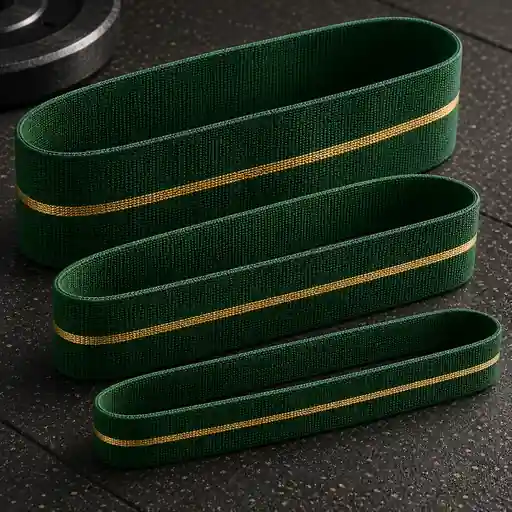
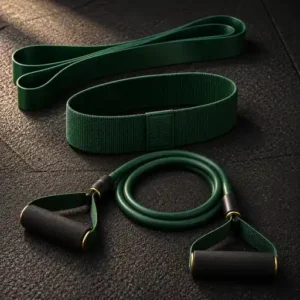
Loop resistance bands form a continuous circle of material, giving them a different setup from an open flat band or a tube with handles. Their usefulness depends strongly on length and construction. A short loop intended for leg movements should not be treated as equivalent to a long loop designed for another task.
Read MoreRead Less
Begin with the exercise and the position of the band on the body or approved attachment. Explore Sport Roos to compare band formats within a broader training setup. Choose a level that lets the intended movement remain controlled from start to finish. The smallest and lightest item is not automatically appropriate for every warm up, just as a longer loop is not automatically suitable for supporting bodyweight. Explore Resistance Bands to compare portable resistance formats and their setup needs.
Short Fabric Loops and Longer Elastic Formats
Fabric loops may combine elastic fibres with a wider textile surface, while other loops use exposed elastic material in different widths and thicknesses. Short formats are often selected for specific lower body exercises; longer formats can provide different gripping, resistance or assistance options where the product permits them. Check the actual length and whether it is measured flat or around the full loop. That distinction can make two listings difficult to compare if it is overlooked. Surface texture, seam construction and width influence how the band feels against clothing or skin. Do not assume a fabric covering makes a loop suitable for every stretch or attachment. Read the intended use and compare the dimensions with the space and movement required by your chosen exercises. Consider Tube Resistance Bands for a handled resistance system with compatible connections.
Resistance Levels and Useful Size Choices
Resistance depends on the band's construction and how far it is extended. Colour labels and terms such as light or heavy are not universal between products. Compare the manufacturer's guidance for the exact loop and note any stated maximum extension. A short loop can become highly tensioned over a relatively small movement, so the initial position matters as much as the final range. Choose a resistance that allows the intended exercise without forcing the band beyond its instructions. If several people use the same collection, clearly identified sizes and levels make selection easier. A set can be useful when its steps suit different exercises, but a large number of colours does not necessarily provide a practical progression. Check the individual dimensions and levels included rather than relying on the set's combined description.
Placement and Approved Attachment Methods
Use the loop in the positions described for the product and exercise. A band placed around the limbs needs an appropriate fit and contact area, while an anchored loop needs a suitable connection and pulling direction. Keep the material away from sharp edges, abrasive surfaces and parts that can trap it. Do not knot a loop or attach it to an unsuitable object simply to shorten its working length. If assistance work is intended, verify that the exact product and anchoring arrangement are suitable for that use. Allow clear space around the movement and avoid directing a stretched band towards another person. Check the setup before each set, particularly where the band can roll, twist or move during an exercise. Correct placement is a practical part of choosing the right dimensions. Consider Suspension Trainers when an approved anchor and bodyweight station suit your space.
Choosing Loops for Home or Shared Workouts
A personal band can stay matched to your regular exercises, while a shared collection needs clear identification and a consistent storage place. Think about which movements need a short loop and which need another format before buying several similar items. If the band is used over clothing, consider the contact feel and whether the width suits the chosen placement. Compact storage is useful, but the band should not be compressed against sharp accessories in a bag. For a circuit, allow space to put the loop on and remove it without stepping into another station. Compare package contents carefully and note whether resistance levels are supplied individually or together. The most useful collection provides suitable options for a few repeatable tasks rather than requiring users to improvise with whatever size happens to be available. Compare Weighted Vests if suitable exercises call for carefully fitted wearable resistance.
Checking Elastic Material and Fabric Seams
Look over the entire loop before use and pay particular attention to seams, thin areas and surfaces that contact anchors or footwear. Cuts, cracking, frayed stitching or unusual stretching deserve assessment before further training. Do not use a damaged loop simply because the rest of it looks intact. Clean fabric and exposed elastic according to their respective instructions, avoiding chemicals or temperatures that can affect the material. Let bands dry before storage and keep them away from prolonged sunlight, heat and abrasive equipment. Store loops in a relaxed position without tight knots or sharp folds. Retain the original size and resistance information so replacement choices can be compared accurately. Regular checks are especially useful when several similar bands share a pouch and their handling history differs.