
No products were found matching your selection.
Pumps chosen for home and portable use
Pumps should suit the bicycle’s valve system and the setting in which they will be used. A floor pump kept at home can have different priorities from a compact design carried during rides.
Read MoreRead Less
Begin by considering the tyres and valves on your bicycle, then decide how the pump will be transported or stored. Do not assume every pump works with every connection because an adapter appears to be included. Check the exact specifications and operating instructions for the model. Think about the handle, base, hose and access to the valve as well as the packed dimensions. A practical choice lets you follow the inflation requirements of your own components without relying on a familiar looking head or a maximum pressure figure that does not explain compatibility on its own.
Confirm valve and head compatibility
Compare the pump head’s stated compatibility with the valve type on the bicycle. Some heads require a particular setup or adapter, and the method can differ between designs. Read the instructions before connecting rather than forcing a fitting that does not engage correctly. Check what is supplied and whether any adapter is intended for bicycle use or another application. Valve access can be affected by wheel design and the available space, so consider the complete arrangement. A hose or head that works conveniently on one bicycle may feel awkward on another. Keep small compatible parts organised if the pump uses them. Correct connection is part of choosing the equipment, not merely a step to assume will work once the pump has been delivered.
Read pressure specifications in context
The pump’s stated operating range needs to be considered alongside the inflation requirements and limits of the bicycle components. Follow the relevant tyre, rim and bicycle guidance rather than using one pressure for every setup. A maximum figure on a pump is not a recommendation for your tyres. If several component instructions apply, obtain the correct guidance where requirements are unclear instead of guessing. Gauge markings, units and display layout can influence how straightforward the pump is to read, so compare them in the product information. Do not assume every gauge has the same accuracy or that a prominent number explains all operating conditions. Choose equipment suitable for the intended application and use it according to its instructions, keeping the component specifications available when inflating an unfamiliar setup.
Compare floor and portable construction
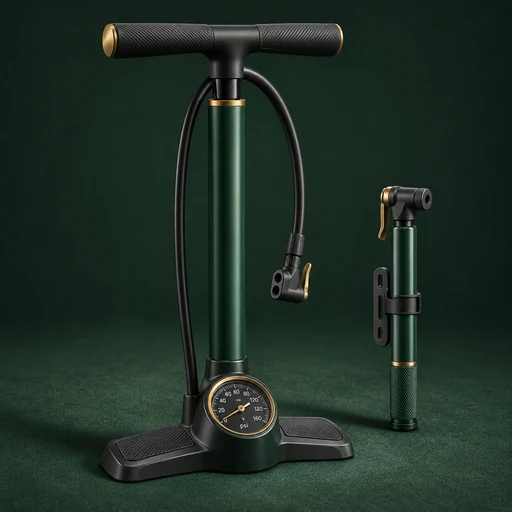
A floor design may prioritise a base, larger handle and hose arrangement, while a portable model focuses on carrying dimensions and a different operating position. The exact construction varies, so read the details rather than treating every pump within a style as identical. Check material information, stated weight and how the handle or hose is stored. A compact appearance can be convenient without being the best choice for every home routine. If a carrying bracket is supplied, confirm its attachment requirements and clearance on your bicycle. Do not assume the mount fits all frames or bottle cage arrangements. Think about whether you need one pump or separate equipment for different settings, choosing around actual use rather than simply collecting several versions of the same function.
Practise operation before depending on the pump
Learn the connection, release and operating sequence in a familiar place before carrying the pump on a longer outing. Follow the manufacturer’s guidance for positioning the pump and avoiding stress on the valve or other components. Check the head, hose and any required adapter before use. If a connection leaks or behaves differently, stop and review the setup instead of forcing a part or continuing without understanding the problem. Keep the pump accessible with any compatible repair equipment you normally carry. Reassess compatibility when changing tyres, wheels or bicycles. A portable pump is useful only when its operation is understood and the correct components are present. Your pre-ride preparation should include the condition of the bicycle itself, rather than treating a carried pump as a reason to overlook an existing inflation issue.
Care for hoses, heads and mounting parts
Remove dirt and moisture as directed after use, paying attention to the head and other areas where debris can affect connection. Follow the care guidance before applying cleaners, lubricants or replacement seals. A part from a similar pump is not automatically compatible. Inspect hoses, fittings, handles and any carry mount for wear or damage. Store the pump so connections are protected from unnecessary pressure and small adapters remain together. If a gauge or mechanism changes its behaviour, obtain the correct guidance rather than assuming it remains suitable because the outside looks undamaged. Check operation periodically when the pump is carried but rarely used. A simple inspection at home is easier than discovering a missing adapter or damaged hose when equipment is needed during an outing.
Compare Cycling, Bikes, Bike Lights, Bottles & Cages and Bike Accessories to organise the rest of your cycling kit. Visit Sport Roos to explore equipment for your next ride.