
No products were found matching your selection.
Locks selected around your bicycle and routine
Locks should be chosen with the bicycle, parking arrangements and everyday handling in mind. A lock that is easy to carry may have different usable dimensions from a larger design intended for another arrangement.
Read MoreRead Less
Begin by considering where and for how long the bicycle is usually left, then compare the product’s stated application. No lock can guarantee that theft will not occur, so avoid interpreting a substantial appearance or a technical description as certainty. Read the exact model information and any rating details before making a shortlist. Think about how the lock will travel on the bicycle or in your bag, and how easily it can be operated. A practical purchase is one that suits the intended locking arrangement and can be used consistently without relying on assumptions about its size or supplied components.
Compare lock styles and usable dimensions
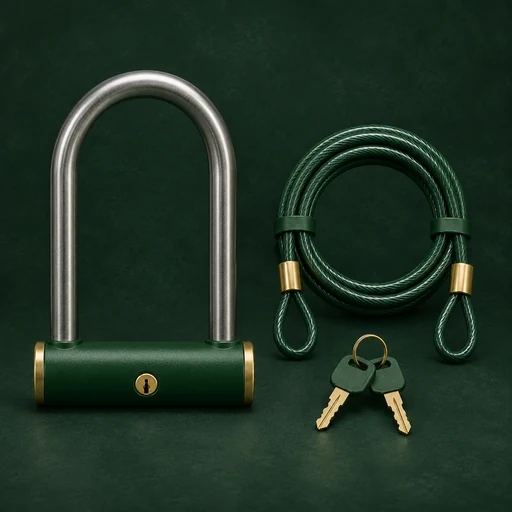
U-locks, chain designs, cables and folding arrangements can provide different shapes, lengths and ways of handling the equipment. Check the actual internal dimensions or usable length rather than judging only the overall size in a photograph. A lock needs enough room for the intended arrangement, but more length or space is not automatically useful for every bicycle. Read the manufacturer’s instructions for the design and the components it is intended to secure. Do not assume a supplied cable has the same characteristics or rating as the main lock. If a set includes several items, assess their purposes separately. Consider access around the frame and other equipment, along with how the lock will be positioned when used. A realistic check of the intended arrangement is more informative than comparing weight alone.
Read security ratings and product claims carefully
If a product has a stated security rating, check the organisation or scale involved and the exact model or component to which it applies. Different rating systems should not be treated as interchangeable. Do not invent a rating from the appearance of a lock or assume one version of a design covers every size. Read limitations and any accompanying conditions before relying on a claim. If insurance requirements are relevant, compare the insurer’s current terms directly with the equipment information rather than treating a category description as confirmation. A rating can be useful product information without being a guarantee against theft. Your shortlist should also consider usable dimensions, correct operation and the way the lock will be carried, keeping all those details connected to your actual routine.
Check keys, combinations and carrying systems
Operation differs between keyed and combination locks, so choose a system you can manage reliably and follow its instructions. Confirm the number of supplied keys or the process for setting and retaining a combination, where applicable. Keep any registration or replacement information in an appropriate place, separate from the bicycle where practical. Do not assume every brand offers the same replacement arrangements. Carry mounts also need a compatibility check against frame dimensions and available clearance. A mount shown in a photograph may be optional, so verify what is included. Fit the equipment only as directed and make sure it does not interfere with controls, cables or normal movement. A convenient carrying solution matters because a suitable lock is useful only when it comes with you and remains straightforward to access.
Practise the intended locking arrangement
Learn how the design opens, closes and confirms engagement before depending on it during a journey. Use the manufacturer’s guidance for positioning and securing the bicycle, and assess the location independently rather than assuming any fixed object is appropriate. Check local rules for where bicycles may be left and avoid obstructing access. If additional components are used, understand the purpose of each instead of treating the whole arrangement as one uniform product. Keep the lock and key or combination accessible without carrying unnecessary loose parts. Reassess the setup when changing bicycles or parking locations, since dimensions and access can differ. A consistent routine should be based on the actual equipment and circumstances rather than the locking method used with a previous bicycle or a different style of lock.
Maintain the mechanism and inspect the lock
Follow the manufacturer’s care guidance for the mechanism, outer covering, hinges and any supplied mount. Do not apply an unapproved lubricant or cleaner simply because it is used on another bicycle component. Remove dirt and moisture as directed, and store the equipment in suitable conditions when not in use. Check for damage, changes in operation and wear in carrying straps or fasteners. If the mechanism becomes uncertain, obtain the correct guidance rather than forcing it or improvising a repair. Keep compatible keys and other components organised so the complete kit can be checked before a ride. A clean appearance does not establish the condition of every internal part. Regular attention helps identify an operating problem while there is time to address it before the lock is needed away from home.
Compare Cycling, Bikes, Bike Lights, Pumps and Bike Accessories to organise the rest of your cycling kit. Visit Sport Roos to explore equipment for your next ride.